
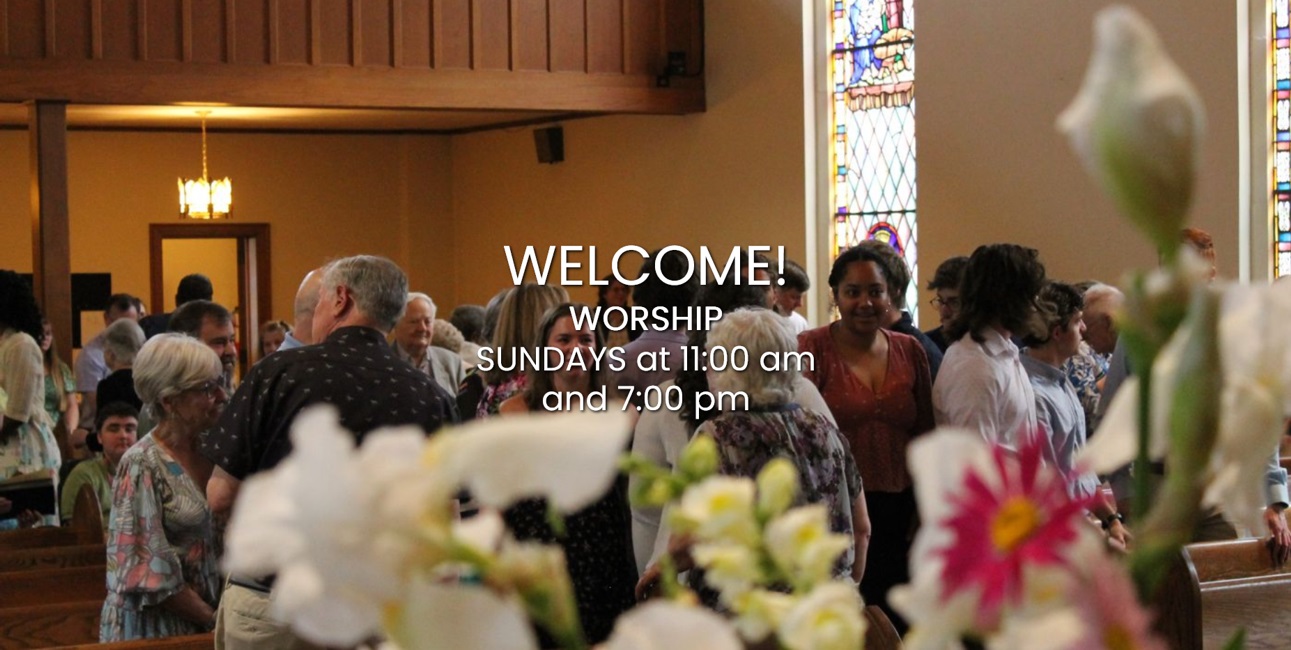
A PLACE YOU CAN CALL HOME
If you’re looking for a church home in the Raleigh and Triangle area, you’ll love Fairmont UMC. Find out why and plan your visit here.

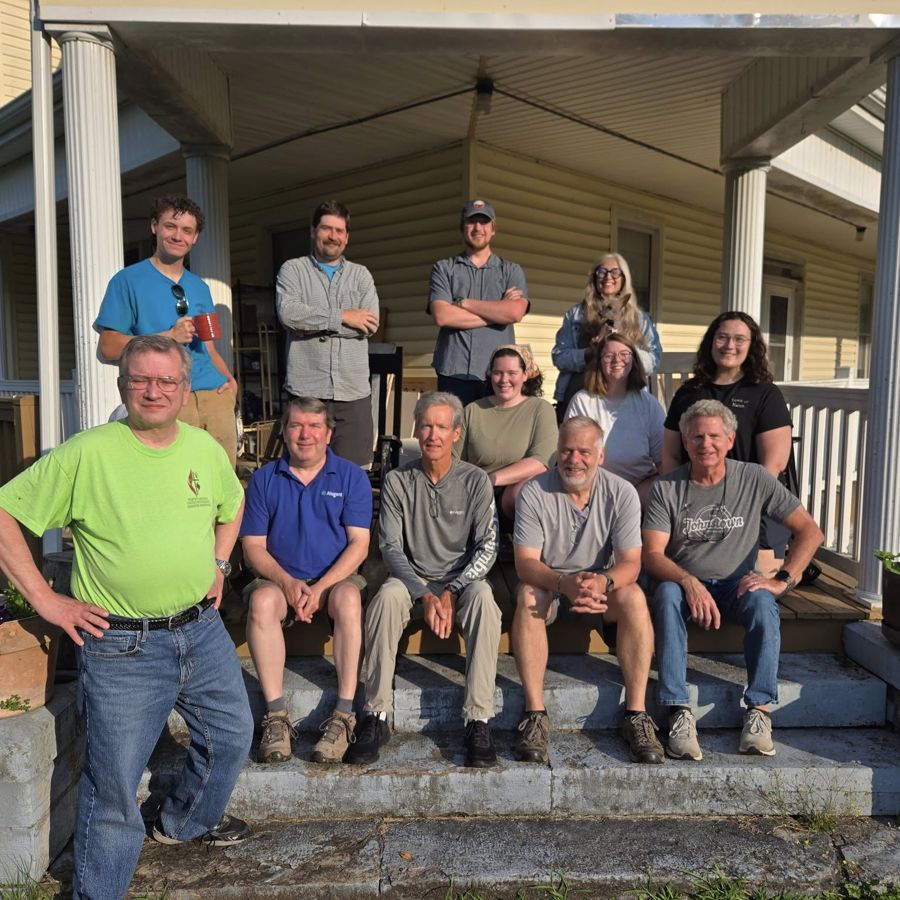
WE LOVE OUR KIDS
Children are very important to us. We strive to create a place where the entire family can belong and love following Jesus.
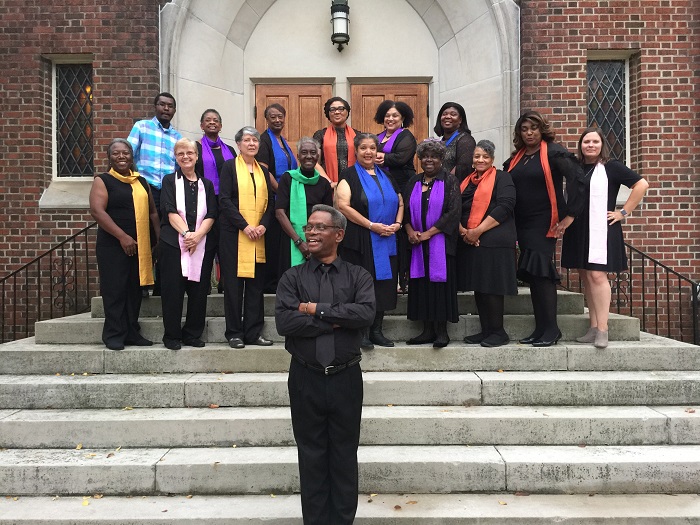
COMMUNITY FOR YOU
There is a place for you at Fairmont UMC. You’ll find Groups are an easy place to belong and meet lifelong friends!
Grateful by Diana Butler Bass

Via Zoom (Noon time) study – Monday, Starting January 23rd– February 13th.
All are welcome to join in on our weekly group discussion.
Click here to join zoom meeting
Meeting ID: 817 2513 7097
Passcode: 549771
Facilitated by Michelle Riley (This email address is being protected from spambots. You need JavaScript enabled to view it. Michelle with any questions)
Publisher’s Summary:
If gratitude is good, why is it so hard to do? In Grateful, Diana Butler Bass untangles our conflicting understandings of gratitude and sets the table for a renewed practice of giving thanks.
We know that gratitude is good, but many of us find it hard to sustain a meaningful life of gratefulness. Four out of five Americans report feeling gratitude on a regular basis, but those private feelings seem disconnected from larger concerns of our public lives. In Grateful, cultural observer and theologian Diana Butler Bass takes on this “gratitude gap” and offers up surprising, relevant, and powerful insights to practice gratitude.
Bass, author of the award-winning Grounded and ten other books on spirituality and culture, explores the transformative, subversive power of gratitude for our personal lives and in communities. Using her trademark blend of historical research, spiritual insights, and timely cultural observation, she shows how we can overcome this gap and make change in our own lives and in the world.
With honest stories and heartrending examples from history and her own life, Bass reclaims gratitude as a path to greater connection with God, with others, with the world, and even with our own souls. It’s time to embrace a more radical practice of gratitude — the virtue that heals us and helps us thrive.
January 23rd: Prologue, Chapter 1 & 2
- Feeling Grateful
- Heart Matters
January 30th: Chapter 3 & 4
- Habits of Gratitude
- Intentional Practice
February 6th: Chapter 5 & 6
- Grateful Together
- Thankful and Festive
February 13th: Chapter 7, 8, and Epilogue
- The Grateful Society
- Circles of Gratitude
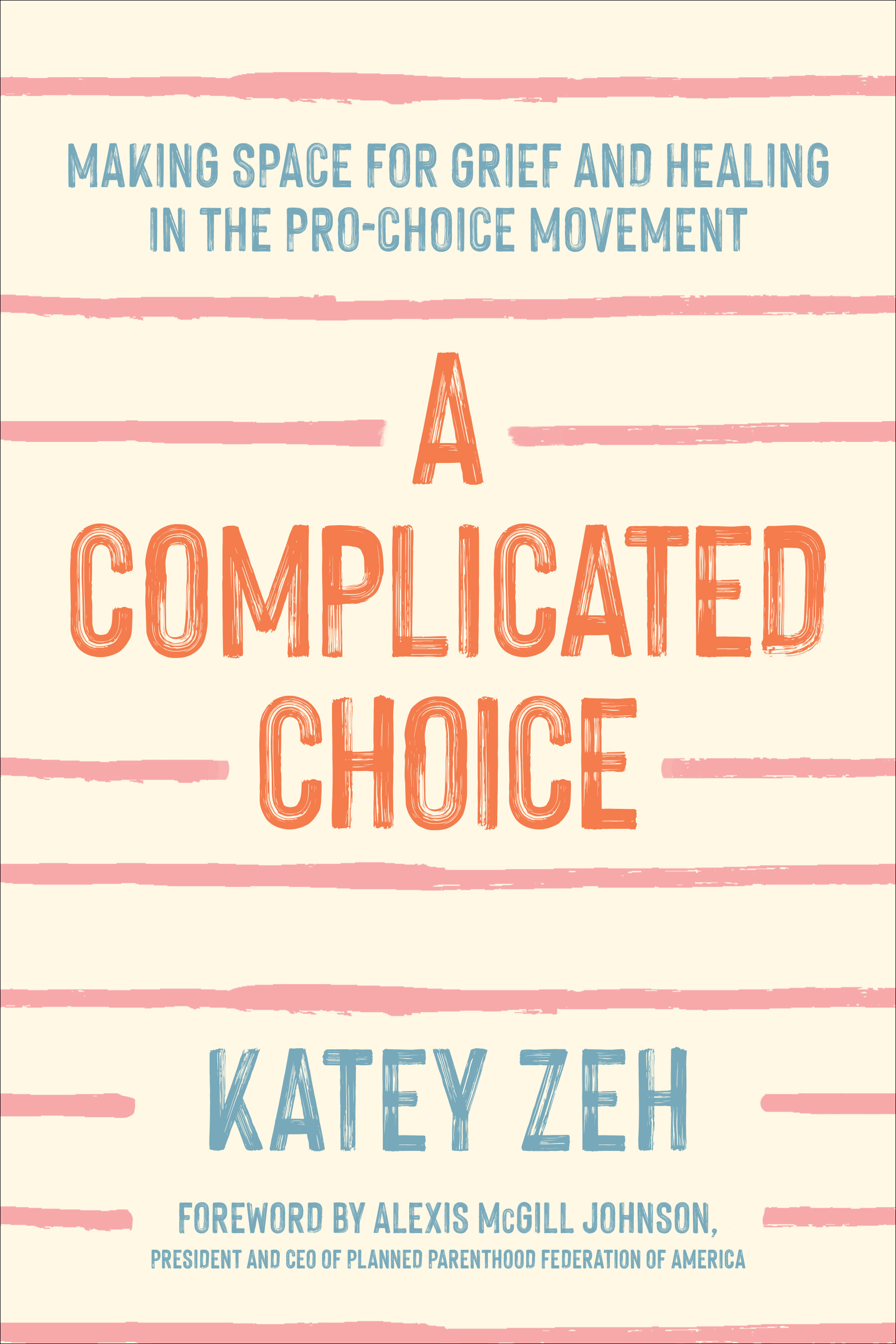
A Complicated Choice by Katey Zeh
 Via Zoom (Noon time) study – Monday, Starting November 14th (off Nov. 21st for Thanksgiving week and Dec. 19th & 26th for Christmas week)– Jan. 23rd
All are welcome to join in on our weekly group discussion.
Click here to join zoom meeting
Meeting ID: 817 2513 7097
Passcode: 549771
Facilitated by Michelle Riley (This email address is being protected from spambots. You need JavaScript enabled to view it. Michelle with any questions)
Publisher’s Summary:
Too often, the public abortion debate depicts the experience of ending a pregnancy in falsely simplistic terms. Anti-abortion activists falsely contend that abortion is always emotionally damaging for the pregnant person, while pro-choice activists focus on honoring bodily autonomy and personal conscience. In particular, the pro-choice movement fails to acknowledge that some people experience abortion as a kind of loss.
A Complicated Choice addresses the fact that abortion stigma is ubiquitous, even among those who identify as pro-choice. Rev. Katey Zeh opens up space for the complexities of our reproductive lives, giving voice to the experiences of grief, loss, and healing surrounding abortion experiences. She weaves these personal stories with key insights from the fields of psychology, theology, and public policy.
A Complicated Choice goes beyond the falsely simplistic terms “pro-life” and “pro-choice” that define the public abortion debate and centers the real people making the decision to end a pregnancy in the context of their full lives and circumstances. A call to people of faith and to all people to examine our judgments about people who have abortions, we are invited into the act of sacred listening to the real stories of those most impacted. ©2022 Katey Zeh (P)2022 Tantor
Nov. 14th: Chap 1
Honoring Your Experience of Abortion
Nov 28th: Chapters 2 & 3
Uncovering the culture of Shame, Stigma, and Silence around Abortion
For Abundant Life
Dec. 5th: Chapters 4 & 5
For Self-Preservation
For the Dignity of Young People
Dec. 12th: Chapters 6 & 7
For a Just Society
For the Good of Growth
Jan. 2nd: Chap 8 and Conclusion
For Communities That Heal
Conclusion
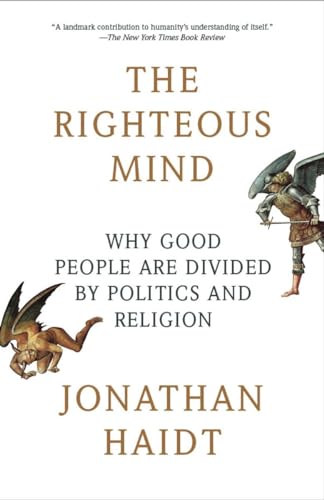
The Righteous Mind by Jonathan Haidt
Via Zoom (Noon time) study – Monday, August 8th (off Labor Day, Sept. 5th & Oct. 10th Indigenous Peoples’ Day) – Nov . 7th
Facilitated by Greg Bottomley (This email address is being protected from spambots. You need JavaScript enabled to view it. with any questions)
This book answers the simple but essential question: Why can’t we all get along?
Moral psychologist Jonathan Haidt explains why people around the world, including liberals and conservatives in the United States, have different moral frameworks. He argues that moral judgments are emotional, not logical—they are based on stories rather than reason. Consequently, liberals and conservatives lack a common language, and reason-based arguments about morality are ineffective. This leads to political polarization.
The Righteous Mind explores how our divergent moralities evolved, why morality is about more than just fairness, and how we can counter our natural self-righteousness to decrease political divides.
All are welcome to join in on our weekly group discussion. Note: we are skipping Chapter 11.
Click here to join zoom meeting
Meeting ID: 890 4284 8308
Passcode: 106200
Part I: Intuitions Come First, Strategic Reasoning Second
Aug. 8th
Introduction
Chap. 1. Where Does Morality Come From?
Aug. 15th
Chap. 2. The Intuitive Dog and Its Rational Tail
Aug. 22nd
Chap 3. Elephants Rule
Aug. 29th
Chap 4. Vote for Me (Here’s Why)
Part II: There’s More to Morality than Harm and Fairness
Sept. 12th
Chap 5. Beyond Weird Morality
Sept. 19th
Chap 6. Taste Buds of the Righteous Mind
Sept. 26th
Chap 7. The Moral Foundations of Politics
Oct. 3rd
Chap 8. The Conservative Advantage
Part III: Morality Binds and Blinds
Oct. 17th
Chap 9. Why Are We So Groupish?
Oct. 24th
Chap 10. The Hive Switch
Oct. 31st
Chap 12. Can’t We All Disagree More Constructively?
Nov. 7th
Conclusion
Raise Your Voice
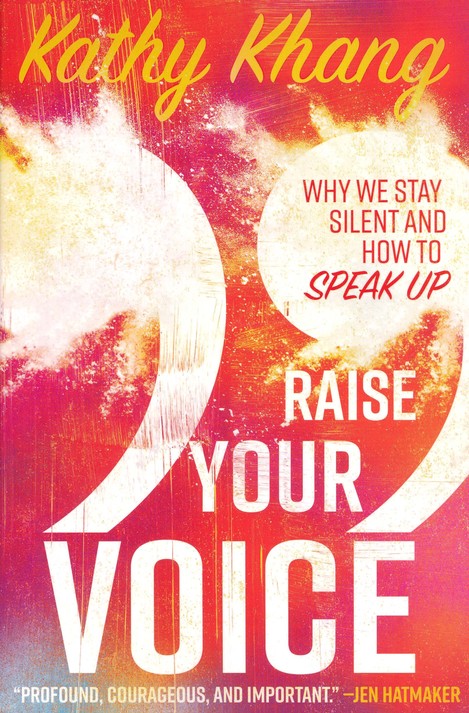
Raise Your Voice: Why We Stay Silent and How to Speak Up; by Kathy Khang
Via Zoom (Noon time) study – Monday, May 16th (off Memorial Day, May 30th)– June 27th
Facilitated by Michelle Riley (This email address is being protected from spambots. You need JavaScript enabled to view it. with any questions)
In some communities, certain voices are amplified and elevated while others are erased and suppressed. It can be hard to speak up, especially in the ugliness of social media. Power dynamics keep us silent and marginalized, especially when race, ethnicity, and gender are factors.
What can we do about it? Activist Kathy Khang roots our voice and identity in the image of God. Because God created us in our ethnicity and gender, our voice is uniquely expressed through the totality of who we are. We are created to speak, and we can both speak up for ourselves and speak out on behalf of others. Khang offers insights from faithful heroes who raised their voices for the sake of God’s justice, and she shows how we can do the same today, in person, in social media, in organizations, and in the public square.
Be silent no more. If you have wondered when and how to speak, hear God’s invitation to you to find and steward your authentic voice, whether in word or deed, to communicate the good news in a messed-up world. As you discern God’s voice calling you to speak, you will discover how your voice sounds as you express God’s heart to others. And the world will hear you loud and clear.
All are welcome to join in on our weekly group discussion.
Click here to join zoom meeting
Meeting ID: 897 5461 3116
Passcode: 269588
Part 1: Why We Stay Silent
May 16th
Introduction: The Risk of Silence Versus the Risk of Raising Your Voice
Chap. 1. Seen but Not Heard
May 23rd
Chap. 2. Who Am I?: How Imago Dei Gives Us Agency and a Voice
June 6th
Chap 3. Learning to Speak
Chap 4. Fear and Failure
Part 2: How to Speak Up
June 13th
Chap 5. Confront Boldly. Transform Your Circumstances with Moral Courage.
June 20th
Chap 6. Think Inclusively. They’re Your People, Too!
June 27th
Chap 7. Live Justly. Choose Fairness & Equality Every Day.
Click here to watch the trailer video for this book...


FAQ
Have questions? We have the answers!
Where are you located?
Our address is 2501 Clark Avenue in Raleigh. We are 2 blocks north of Hillsborough Street and NC State, and 3 blocks west of the Village District in Raleigh.
What time is worship?
Sundays at 11:00 AM & 7:00 PM
Where do I park?
Fairmont UMC has two parking lots. One is across the street from the church’s main entrance on Clark Avenue and Horne Street (its entrance is at 300 Horne Street). The second lot is accessible off Clark Avenue on the same side as the church building next to our Hut (2503 Clark Avenue). You can also park by the curb on Clark Avenue and Horne Street.
What does worship typically look like?
How do I join a ministry?
Talk to our pastor, choir director, or children’s coordinator before or after worship, and they can help you find a ministry that gets you excited at Fairmont.
You can also contact any one of our staff members:
How do I join a small group?
You can talk to our pastor, or someone in the pews next to you, and they will be able to point you in the right direction. Our small groups are open and a great place to learn, form friendships, and find belonging at Fairmont.
How can I get involved in serving?
When you see a community or church event that interests you, put your name down on our Sign-Up Board or talk to our pastor. There are many ways to serve our neighbors in the church and wider community at Fairmont.